Quick answer: for most locations, 10 AM–12 PM and 3–5 PM offer the best balance — UV strong enough to build color, gentle enough for comfortable sessions. 12–3 PM is peak UV: the fastest tan, but only in short, carefully timed doses. The exact best window shifts every single day with season, latitude and cloud cover, so the reliable method is reading today's hourly UV forecast rather than a rule of thumb.
How UV moves through the day
UV intensity follows the sun's angle: it climbs through the morning, peaks around solar noon (roughly 1 PM in daylight-saving months), and falls through the afternoon. That creates three practical tanning zones:
| Time (typical summer) | UV | Best for |
|---|---|---|
| 8–10 AM | Low → moderate | Gentle sessions, very fair skin, maintaining color |
| 10 AM–12 PM | Moderate → high | Building a tan — efficient with manageable risk |
| 12–3 PM | Peak | Fast color in short, timed sessions with SPF |
| 3–5 PM | High → moderate | Building a tan — same logic as late morning |
| After 5 PM | Low | Golden-hour lounging; minimal new color |
Why the "rule of thumb" fails
Those hours are averages. In practice your best window depends on: season (a UK October noon may never leave "low" while a Lisbon June morning hits "high" by 10 AM), latitude and altitude, cloud cover (thin cloud still passes most UV), and reflection from water and sand. Two beach days in the same city can have best windows two hours apart.
The reliable method: read the hourly curve
Instead of memorizing rules, look at today's hourly UV forecast and pick the stretch that matches your goal — moderate UV for relaxed building, high UV for a short fast session.

Every morning, SupaTan analyzes the hourly UV forecast for your exact location and shows a Best Window card — like “Fast Tan: 12 PM – 4 PM” — plus a 7-day plan that rates each day (“Great tanning day, best 1–4 PM”). Zero math, zero guessing.
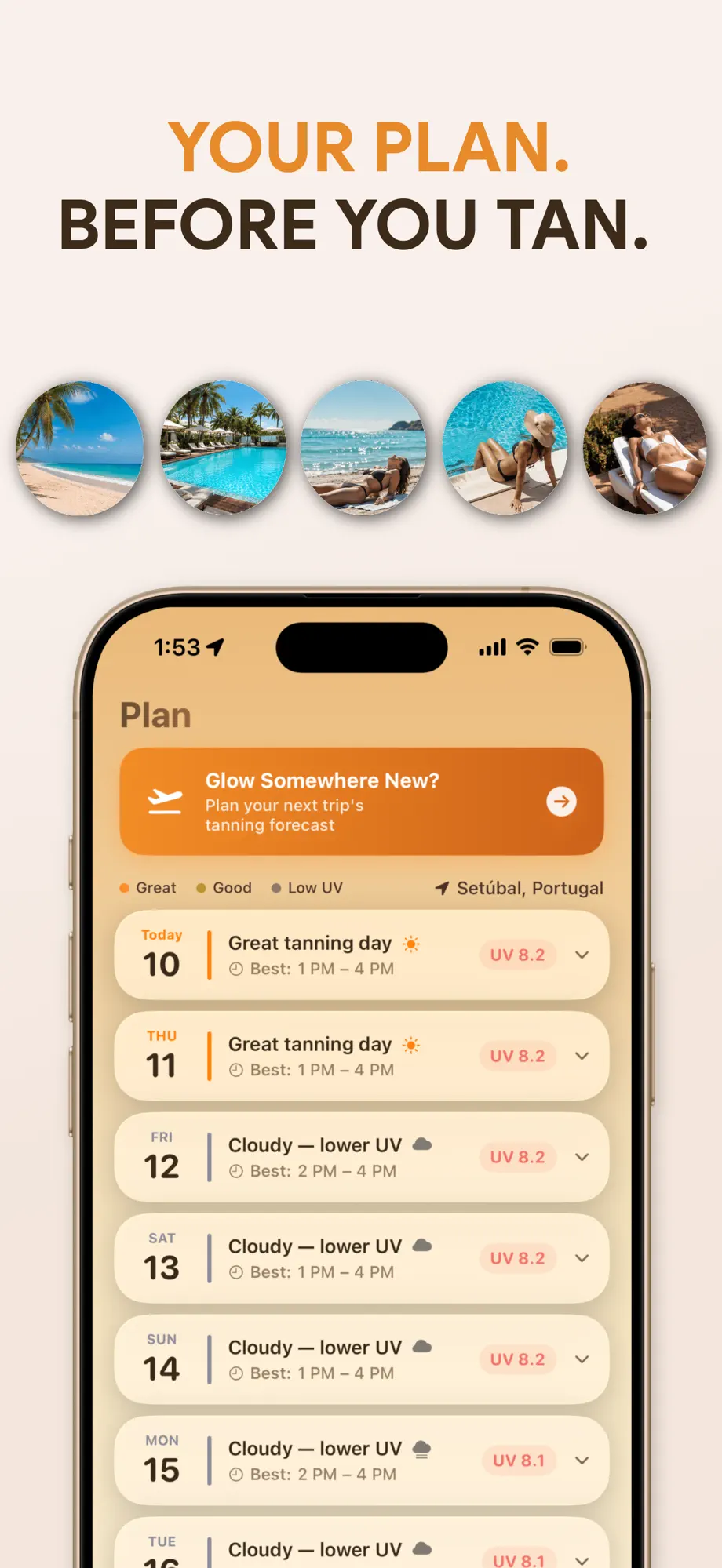
Finding your best time in SupaTan
- Today tab → Best Window card. One glance tells you when to go out and what mode it is (Soft Tan / Fast Tan / Maintain).
- UV Forecast curve. See the whole day's shape — when UV crosses into your target zone and when it drops back out.
- Plan tab. The next 7 days, each rated with its own best window, so you can schedule tanning days around work and weather.
- Notifications. SupaTan can nudge you when your window opens, so you never miss the good hours.
Frequently asked questions
Is morning or afternoon better for tanning?
They're roughly symmetric around solar noon: 10 AM–12 PM and 3–5 PM deliver similar UV. Morning often has clearer skies; afternoon is warmer. Pick by comfort — or by which window your UV forecast rates higher today.
Can you tan after 5 PM?
Usually only minimally — UV drops to low levels in the late afternoon at most latitudes. In midsummer at southern latitudes a 5–6 PM stretch can still hit moderate UV; the hourly forecast tells you if today qualifies.
Can you tan on a cloudy day?
Often, yes. Up to 80% of UV passes through thin cloud. If your hourly forecast shows UV 3+, meaningful tanning is possible even under haze.