Quick answer: a UV index of 3–5 (moderate) is the best range for building a gradual, even tan with low burn risk. UV 6–7 develops color faster but requires shorter sessions and diligent SPF. Below UV 3, tanning is very slow; above UV 8, sessions should be brief and carefully timed. The UV index changes hour by hour — the smart move is to check the live number for your exact location before you head out.
The UV index tanning chart
The UV index measures the intensity of ultraviolet radiation reaching the ground, on a scale that typically runs 0–11+. Here's what each range means for tanning:
| UV Index | Level | What it means for your tan |
|---|---|---|
| 0–2 | Low | Very little tanning happens. Fine for being outside, but don't expect color. |
| 3–5 | Moderate | The sweet spot. Enough UV to build melanin steadily, gentle enough for longer, lower-risk sessions. |
| 6–7 | High | Fast color. Keep sessions shorter, use SPF, and flip on schedule — burn risk rises quickly. |
| 8–10 | Very high | Color builds very fast, but so does damage. Short, timed sessions only, with SPF 30+. |
| 11+ | Extreme | Not a tanning window. Skin burns in minutes; a burn will undo your tan. |
Why moderate UV beats maximum UV
Tanning is your skin producing melanin in response to UV. That process has a speed limit — blasting your skin with extreme UV doesn't produce proportionally more color, it produces a burn. And a burn is the enemy of a tan: burned skin peels, taking your progress with it and forcing a restart. Consistent moderate exposure builds deeper, longer-lasting, more even color than occasional intense exposure.
How to check the UV index right now
The UV index for your location changes with the hour, the season, cloud cover, altitude and even reflection from water or sand. A generic weather app gives you one daily number; what you actually want is the hourly curve, so you can see when your location enters — and leaves — your target range.

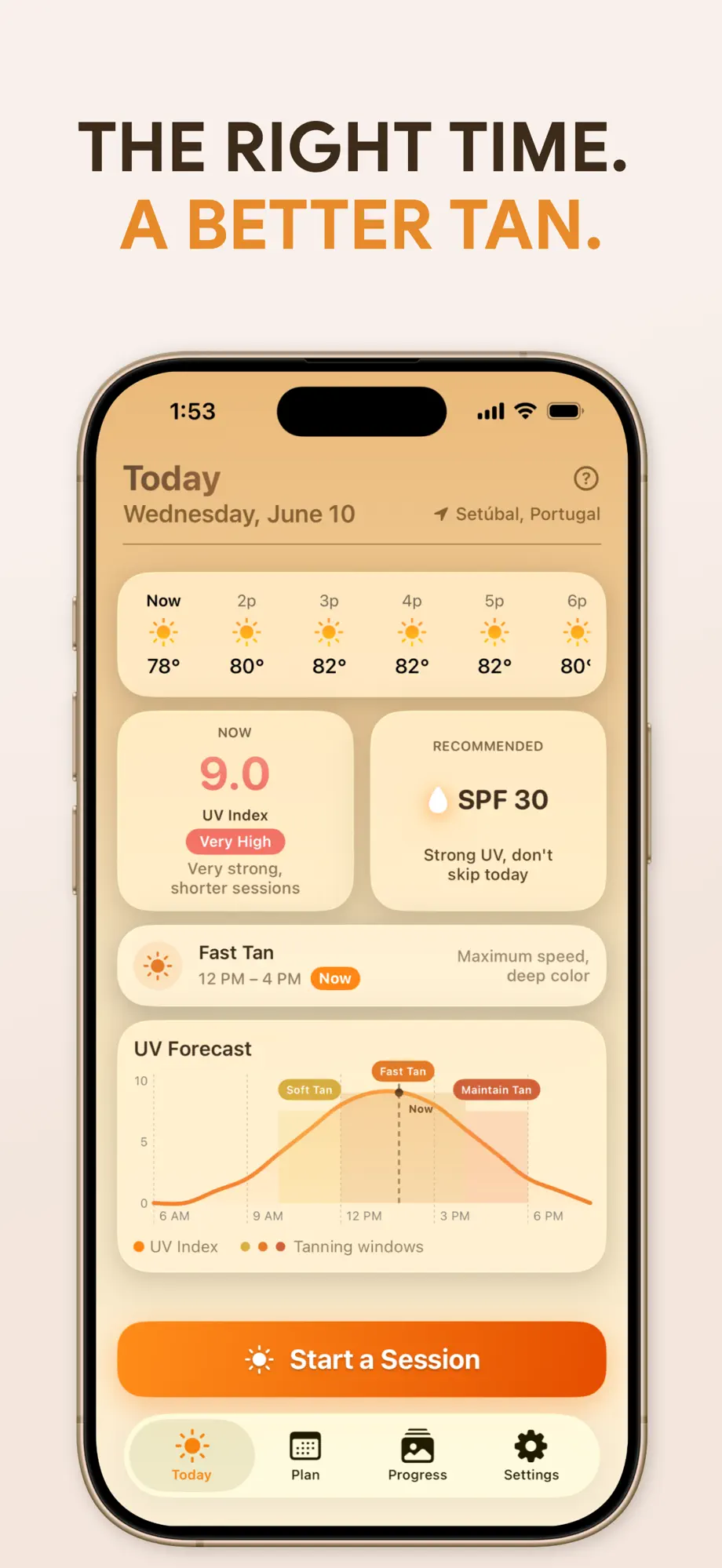
SupaTan shows the live UV index for your exact spot (powered by Apple WeatherKit), maps the hourly curve into Soft Tan, Fast Tan and Maintain windows, recommends the right SPF for the current level, and times your session for your skin type. You never have to interpret the chart yourself — the app does it in real time.
Using UV levels inside SupaTan
- Open the Today tab. The hero card shows the current UV index and its level (e.g., "9.0 — Very High: shorter sessions").
- Read the UV forecast curve. Colored bands mark the Soft Tan, Fast Tan and Maintain windows for the day, so you can pick moderate or fast UV deliberately.
- Check the SPF card. SupaTan recommends an SPF matched to the current UV — e.g., SPF 30 at UV 9 — and reminds you to reapply mid-session.
- Start a session. The timer length is calculated from the live UV and your skin quiz, and flip reminders keep the color even.
Frequently asked questions
Can you tan at UV 3?
Yes — UV 3 is the start of the moderate range and a good level for gradual, lower-risk tanning. Sessions can be longer than at high UV, and color builds steadily over consecutive days.
Can you tan at UV 2 or lower?
Barely. Below UV 3 melanin production is minimal for most skin types, so meaningful color takes impractically long. Wait for a moderate window — an hourly UV forecast shows you when it arrives.
Is a higher UV index always faster for tanning?
Only up to a point. Above roughly UV 7–8 the extra intensity mostly raises burn risk rather than adding proportional color, and a burn erases progress. Timed short sessions with SPF are essential at high UV.