Quick answer: yes — most skin types, including fair skin, can build a tan; they just do it at very different speeds and with different risk profiles. Dermatology's Fitzpatrick scale (types I–VI) describes how skin responds to UV: type I burns almost immediately and tans minimally, type III tans steadily, type VI rarely burns. Your type should set your session length, UV target and SPF — which is exactly what a skin quiz calibrates.
The Fitzpatrick scale, translated to tanning
| Type | Typical traits | Sun response | Tanning strategy |
|---|---|---|---|
| I | Very fair, often freckles, red/blond hair | Always burns, tans barely | Short sessions at UV 3–4 only, SPF 50, expect a subtle glow, not bronze |
| II | Fair | Burns easily, tans slowly | 10–20 min at moderate UV, SPF 30–50, many consecutive days |
| III | Light-medium | Sometimes burns, tans steadily | The classic gradual-tan profile: moderate UV, SPF 30, consistent week |
| IV | Olive/light brown | Rarely burns, tans easily | Can use high-UV Fast Tan windows with timed sessions and SPF 15–30 |
| V | Brown | Very rarely burns | Longer sessions fine; focus on evenness and hydration for a richer glow |
| VI | Deeply pigmented | Almost never burns | Tanning deepens tone subtly; SPF still recommended for skin quality |
Can pale skin really tan?
Types II–III absolutely can — the failure mode is impatience. Fair skin punished with long high-UV sessions burns, peels, and ends the week lighter than it started. Fair skin treated to short, moderate-UV sessions on consecutive days builds real, lasting color. Type I is the exception: it can develop a light glow at best, and gradual self-tanner is honestly the better tool for a deep bronze look.
Why “one-size” tanning advice fails
A session length that's conservative for type IV skin is a guaranteed burn for type II. Any useful recommendation has to combine your skin's response curve with today's UV — two numbers that both change the answer completely.

During onboarding, SupaTan asks how your skin actually behaves in sun — burn tendency, tanning speed, natural tone — plus your glow goal. From then on, every session length, SPF recommendation, flip interval and daily window is calculated for your skin type against the live UV index. Fair-skin users get shorter, gentler plans automatically; olive-skin users get efficient Fast Tan sessions.
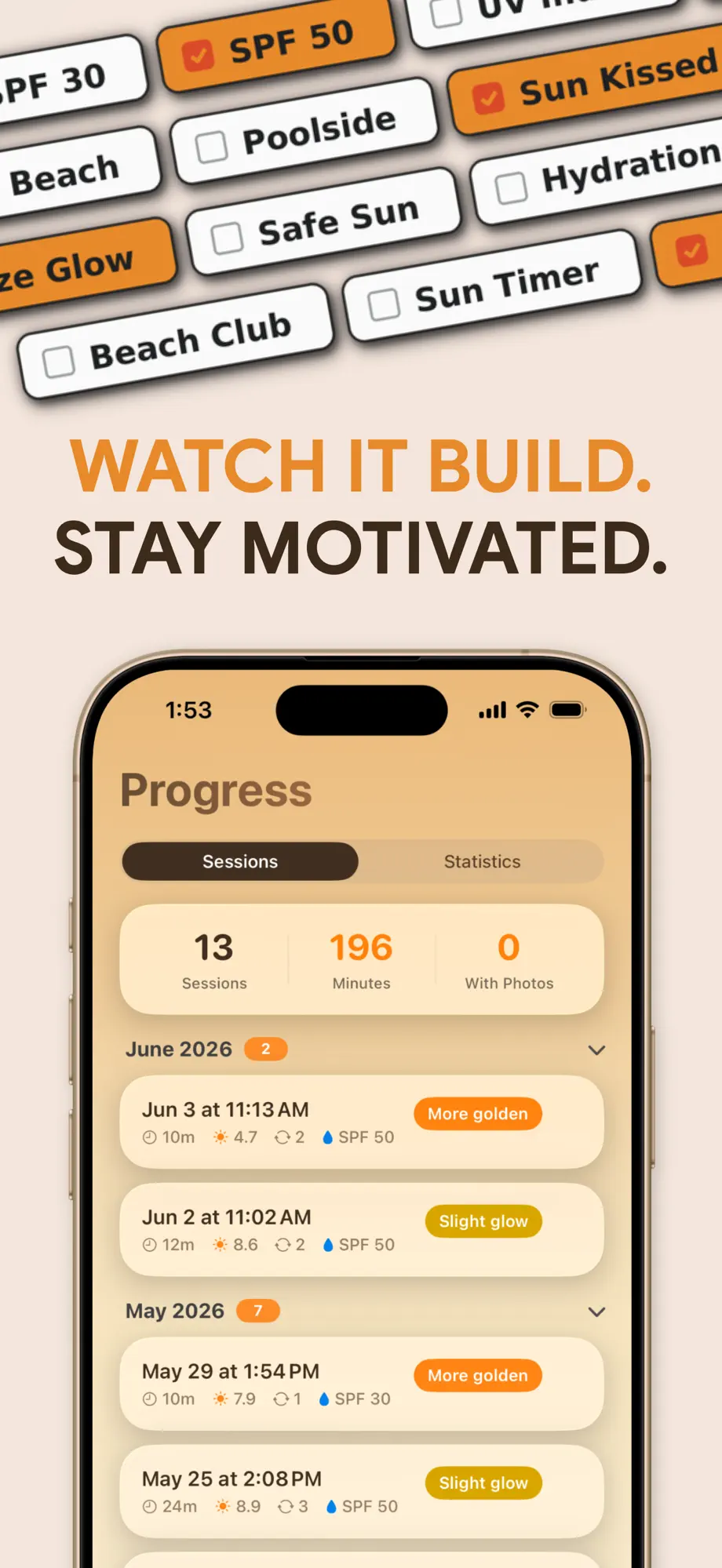
Skin-type workflow in SupaTan
- Take the skin quiz (60 seconds, once). It maps you to a response profile — no dermatology knowledge needed.
- Pick your goal: subtle glow, golden tan, or deep bronze. Ambition changes the plan, not the safety margins.
- Follow the personalized sessions. The app never suggests type-IV durations to type-II skin.
- Log photos. Skin types develop color at different speeds — your own photo timeline is the ground truth that the plan is working.
Frequently asked questions
What Fitzpatrick type am I?
A quick self-check: if you always burn and never tan you're type I; burn easily/tan slowly, type II; sometimes burn then tan, type III; rarely burn and tan easily, type IV; very rarely burn, type V–VI. SupaTan's skin quiz walks you through this in the app.
How long does it take fair skin to tan?
Type II skin typically needs 1–2 weeks of short daily sessions (10–20 minutes at moderate UV with SPF) for clearly visible color. It cannot be rushed — extra exposure converts to burn, not bronze.
Do deeper skin tones need SPF while tanning?
Burn risk is much lower for types V–VI, but UV still drives photoaging and uneven tone. SPF 15–30 keeps the deepening glow even and the skin quality high — SupaTan recommends a level matched to the day's UV.